Koi ponds, fire bowls and over water steps: design elements that make a space yours
The pool is the centre of an outdoor space. The smaller elements around it are what make it recognisable.
October 19, 2026 · 4 min read
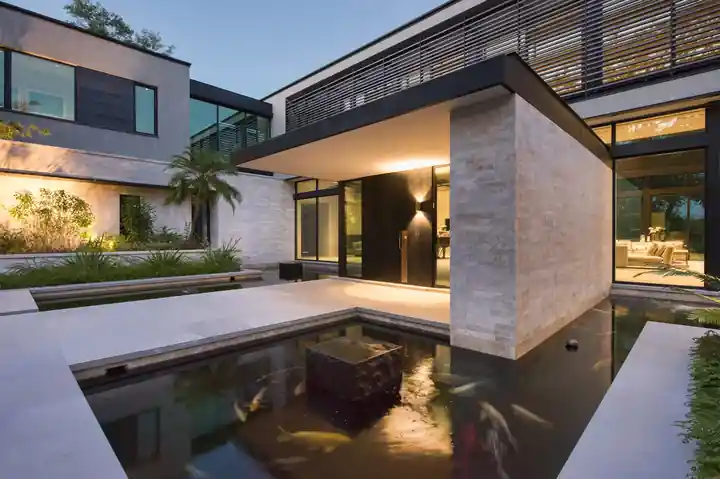
Two pools can be the same size, the same shape and the same depth, and feel nothing alike. The difference is usually in the extras: a pond at the corner of the deck, a flame in a stone bowl at dusk, a line of steps crossing the water. Pool Tech groups these under Distinctive Design Elements, a list that includes Fire Pits and Fire Features, Fountains and Fire or Water Bowls, Koi Pond, Cold Plunge and Hydrotherapy Pool, Pool Waterfalls, Over Water Steps, Bars and Sun Shelves. Each one asks for its own kind of planning.
Koi ponds are not small pools
A koi pond is a living system, and it follows different rules from swimming water. Fish need a pond that is deep enough to hold stable temperatures, filtration built for biological load rather than for sanitiser, and no chlorine. A bottom drain pulls waste to a filter, plants help balance the water, and shade keeps the surface from overheating. A pond that is bolted onto the side of a pool and shares its plumbing is a common mistake. A koi pond needs its own circulation and its own equipment.
Placement matters just as much. A pond near the sitting area can be watched from a chair in the evening, but it should sit away from where leaves and pool chemicals could reach it. Pool Tech's Journey's End Koi Ponds project and the garden and koi pond work in Key West Custom Design Elements show the idea at residential scale: water as part of a garden, not only a place to swim.
Fire and water bowls: small features, large effect
A fire bowl on the edge of a pool is a good example of a feature that looks effortless and is not. It needs a safe, properly installed gas supply, controls that are easy to reach and easy to shut off, and a location away from overhangs and planting that could catch heat. Wind direction decides where the flame leans and where the smoke, if any, goes. Water bowls and fountains share the same vocabulary of stone and sound, and many designs pair them so that fire and water sit side by side.
The sound of moving water also does a quiet job: it masks road noise and gives the space a fixed point. A bowl that overflows gently makes one kind of sound, a sheet waterfall another. These are choices worth hearing before they are poured.
Over water steps and sun shelves
Over water steps are stone or tile treads that cross a section of the pool, letting you walk across the water to a spa, a lounge area or the far side of the deck. They look like a bridge made of landings, and they work best when the spacing suits a normal stride, the surface has enough grip when wet, and the water beneath is deep enough to look right without being dangerous. Their edges and thickness are part of the pool's structure, so they are designed in, not added later.
A sun shelf is a broad, shallow ledge, typically a few inches under the surface, where you can set a lounger, sit with a drink or let children play. It gives a pool a place to rest in, rather than only a place to swim. In a hot climate it is among the most used parts of the whole pool, and it takes up little deck space.
Choosing what belongs
- Start with how you use the space after dark, since fire, lighting and sound all come into their own then.
- Ask how much maintenance each element adds. A koi pond needs regular attention, a fire bowl needs little, a fountain falls somewhere between.
- Consider sightlines from the house. A feature that is seen from the kitchen window is seen every day.
- Think about the people who will use it, including children, guests and anyone who needs steady footing.
- Keep the materials consistent. Stone, tile and plaster that echo each other make several features read as one design.
One plan, not a collection
The risk with design elements is accumulation: a fountain here, a fire pit there, steps added because a catalogue showed them. The better result comes from planning them together, so that the pump room, the gas line, the lighting circuits and the structure behind each one are laid out as a single system. That is why Pool Tech describes its approach as designers and engineers working through the details, and why the same company that draws the koi pond also builds the pool beside it.
If one of these elements has been on your mind, the Distinctive Design Elements page shows the full list and the photographs behind it. You can reach the Pinecrest office at 305.226.7510 or info@pooltechbuilders.com to talk through what suits your property.
Pool Tech Builders, 305.226.7510
Call 305.226.7510More articles
What the operator's permit means for a commercial pool's opening day
The permit is not the last box on the checklist. It shapes the pool from the first drawing.
Infinity, zero entry or wet edge: how water leaves a pool on a waterfront lot
The edge decides how the pool looks from the house, how it feels in the water and how much engineering sits behind it.